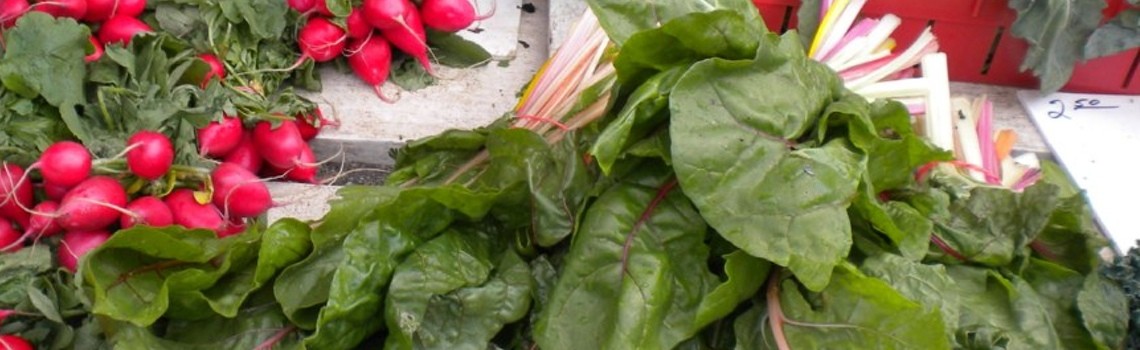
“ANDI” says Eat Your Vegetables!

This past week my nephew asked me what I knew about the ANDI, or Aggregate Nutrient Density Index. See the chart here. The ANDI assesses a food’s vitamin, mineral, antioxidant and phytochemical content PER CALORIE to come up with a number that reflects its nutrient density. Note that 1) not all major vitamins are included, and 2) this is the amount of nutrition per calorie, and not the total amount in the food. It’s critical to understanding the ANDI.


If you’ve never visited “Your Health is on Your Plate” before, visit Lets Start at the Very Beginning to get a jumpstart protecting the health and well-being of the ones you love!! Then check out “A Milestone Celebration — Your Favorite Posts” and “The Most Popular Blog Posts of All” for more great ideas and recipes! Wondering why I capitalize the “f” in Food? See Food with a Capital F.


ANDI scores foods not by the quantity of nutrients in a particular volume (e.g., ½ cup), or in some standard weight (e.g., 4 oz.), but in each CALORIE. Because of this, low-fat items like kale end up with a high score, but high-fat items like nuts get an unexpectedly low score.  So the ANDI score turns out, inadvertently, to be an effective way to cut calories without counting calories. Just don’t rely on it to identify highly nutritious foods that are also high in calories. Why? Because their high-calorie state spreads out all the nutrients over many more calories. Not just high-fat foods either. Even fruits get a lower rating. 


Dr. Joel Fuhrman, who made up the ANDI, recommends that 90 percent of an individual’s diet be composed of plant-based foods with high ANDI scores. Wow, that seems high. Why not 100%?, you might ask. Diets restricted to foods with high ANDI scores are deficient in fat. Nor do they contain sufficient fat-soluble vitamins, like A, D, and K. That fat-soluble vitamins are not part of the ANDI equation, I consider a major shortcoming. I see no reason to strictly limit olives, walnuts, chickpeas, navy beans, apples, swiss cheese, grapes, bananas, and peanut butter. Though adding foods with a high ANDI is a good way to increase the nutritional content of our diets, 90% is an awfully strict standard. A more realistic goal might be to increase your current intake by 10-15%. You can take it up another notch if and when you’re ready. 


Nutrients incorporated into the ANDI score include minerals such as calcium, magnesium, iron, zinc, and selenium; vitamins such as B1, B2, B6, B12, C, and E; phytochemicals and antioxidants such as alpha carotene, beta carotene, lutein, zeaxanthin, glucosinolates, and lycopene; and fiber, both soluble and insoluble. ANDI also incorporates the ORAC (oxygen radical absorbance capacity) score, which is a fancy way of conveying antioxidant strengthWe don’t have a good system for measuring the phytochemical and antioxidant content of foods, despite their major benefits. ANDI seems to me a decent proxy.  


One last interesting observation:  It’s hard to believe that we have identified every last nutrient there is to know about. I think it’s a safe guess that the foods with the highest concentration of nutrients may also be likely to harbor other as yet unidentified nutrients.


To summarize, ANDI is simply a reflection of your grandmother’s sage advice:  Eat your vegetables. I don’t really need an index for that.


Follow Dr Sukol’s posts on Twitter @RoxanneSukolMD and on Facebook at Roxanne Breines Sukol or Your Health is on Your Plate.


YOUR HEALTHY PLATE: Red Quinoa with Pistachios

Thank goodness for quinoa, for pistachios, for Bon Appetit (January 2013), for Mark Bittman at the New York Times, and for thebittenword.com.

If you’ve never visited “Your Health is on Your Plate” before, visit Lets Start at the Very Beginning to get a jumpstart protecting the health and well-being of the ones you love!! Then check out “A Milestone Celebration — Your Favorite Posts” and “The Most Popular Blog Posts of All” for more great ideas and recipes! Wondering why I capitalize the “f” in Food? See Food with a Capital F.

1 tablespoon olive oil

1 shallot, finely chopped

Kosher salt and freshly ground black pepper

1 cup quinoa, red if available, rinsed well in a sieve

1 1/2 cups chicken broth or water

1/4 cup shelled raw pistachios (unsalted), chopped

3 tablespoons chopped flat-leaf parsley

1 tablespoon chopped fresh mint


Heat oil in a medium saucepan over medium heat. Add the shallot, season with salt and pepper, and cook until soft, about 5 min, stirring occasionally, until soft. Add quinoa and cook, stirring frequently, approx 5 min more, until quinoa starts to toast and smell kinda nutty. Add broth and bring to a boil.

Lower the heat, cover the pot, and simmer gently until quinoa is tender, 25-30 min (just 15 for white quinoa). Remove from heat, fluff with a fork, cover and leave for 5 min.

Follow Dr Sukol’s posts on Twitter @RoxanneSukolMD and on Facebook at Roxanne Breines Sukol or Your Health is on Your Plate.


YOUR HEALTHY PLATE: Banana-Almond Butter Muffins

Today I am going to make these muffins especially for my two elder children and their close friends. The house is going to smell amaaaaaaaazing. I’m going to do my very best to use ingredients that come from bulk containers and which have not been stored in plastic. If you’re wondering why, check out this article about phthalates, which raise our bodies’ oxidative stress levels. What does that mean? Basically, it’s like rust, except that instead of being on your bike handles, it’s accumulating on your insides. Call me a radical if you’d like, but the proof is in the pudding, or the muffins, depending.

1 cup roasted almond butter

4 large organic eggs

2 medium ripe bananas

1/4 cup maple syrup

2 teaspoons vanilla

6 tablespoons coconut flour

3/4 teaspoon baking soda

1/2 teaspoon sea salt


Preheat the oven to 350F and line a 12-cup muffin pan with paper liners. Place all ingredients in a food processor fitted with the “S” blade and process until smooth. Scoop batter into muffin cups and bake 25-30 min. Cool on wire rack prior to eating.


This recipe is a gift from The Whole Life Nutrition Kitchen at http://www.nourishingmeals.com.


YOUR HEALTHY PLATE: SPINACH SOUP

We’ve been eating a lot of baby spinach the past few weeks.  Here’s something special to make with it.

If you’ve never visited “Your Health is on Your Plate” before, visit Lets Start at the Very Beginning to get a jumpstart protecting the health and well-being of the ones you love!! Then check out “A Milestone Celebration — Your Favorite Posts” and “The Most Popular Blog Posts of All” for more great ideas and recipes! Wondering why I capitalize the “f” in Food? See Food with a Capital F.


1 tsp olive oil

1 tbsp onion, chopped

4 cups fresh spinach

1 cup vegetable broth

1/2 cup cooked white beans (navy, great northern)

1/2 tsp salt

1/2 tsp pepper

a pinch of nutmeg

Fry the onion in olive oil in a saucepan until soft and clear.  Add spinach and stir gently for 1-2 minutes until bright green and wilting.  Add these and all remaining ingredients to a high speed blender and spin until smooth.  Return to the saucepan, cover, and warm for a few minutes on medium heat.   


Serve with a mint leaf, or Parmesan cheese, or just a spoon.


Follow Dr Sukol’s posts on Twitter @RoxanneSukolMD and on Facebook at Roxanne Breines Sukol or Your Health is on Your Plate.


Stripped Carbs: The Emperor’s New Clothes

I promised a friend that this week I would talk about the four main kinds of stripped carbs in processed edible items.  They are: white flour, white rice, corn starch or syrup, and sugar.  White flour is wheat stripped of its bran and germ.  White rice has been stripped of its husk.  Corn starch and corn syrup are derived from corn.  Sugar is extracted mostly from sugar cane, and less often from dates or beets.


If you’ve never visited “Your Health is on Your Plate” before, visit Lets Start at the Very Beginning to get a jumpstart protecting the health and well-being of the ones you love!! Then check out “A Milestone Celebration — Your Favorite Posts” and “The Most Popular Blog Posts of All” for more great ideas and recipes! Wondering why I capitalize the “f” in Food? See Food with a Capital F.


You may have heard of “enriched” white flour.  This is stripped flour to which minerals and vitamins (mostly iron and B vitamins) have been added so as to prevent anemia and other nutritional deficiencies.  Or you could eat whole grain wheat.  “Enriched” is the industry’s term, not mine.  I would call it “stripped flour with B vitamins and iron, but still without the fiber or the oil-rich germ.”


You may also have heard of “fortified” flour.  This is stripped flour to which folate has been added.  Folate deficiency turns out to be the cause of a particular class of birth defects called neural tube defects, of which spina bifida is the most well known.   Congress mandated that flour be fortified beginning in the 1990’s, approximately 20 years after a causal link began to be established between folate and spina bifida.  You could eat fortified flour.  It still has little or no fiber.  Or you could eat whole grain wheat.


Shortly after rice stripped of its husk was first introduced into the food supply in Southeast Asia, a significant rise was noted in the numbers of deaths from a disease called beri-beri.  Thousands died.  Beri-beri turns out to have been caused by a deficiency of thiamine, which was, not surprisingly, present in the husks that had been removed.  So now white rice is “enriched” with thiamine.  But then again you could eat whole-grain rice.


Corn starch and corn syrup are used extensively in the processed edible-items industry.  Actually, even that’s an understatement.  We began to eat large amounts of corn starch and corn syrup in the 1970s, soon after the industry identified corn syrup as a significantly less costly alternative to sugar.  


Everything is relative, however.  What’s less costly in one way turns out to have been exorbitant in another.  Rates of obesity in the U.S. began to soar.  When I traveled overseas in Europe this past summer, I checked ingredient lists in all kinds of products, and I did notice that whereas virtually all American candy and baked items are made with corn syrup, the French and British candy, cakes and breads are made with sugar.  There was also much less obesity.  Yes, I know the epidemic is multifactorial, and that it’s not being caused simply by corn syrup.  But this, nevertheless, is what I saw.


In nature, carbohydrate always comes with an intact fiber matrix, be it a fruit, a vegetable, a bean, or a whole grain.  Sugar comes from dates, beets, sugar cane, and fruit.  


So, what then?  Am I saying we can never eat anything sweet again?  No, definitely not.  We can all tolerate a treat now and then.  Maybe it’s a cookie every afternoon, or maybe it’s a slice of pie once a week.  But that’s not what’s happening.  Basically, we’re drowning in stripped carbs: Mini-frosto-hoho-choco’s for breakfast.  Or muffins.  Or yogurt with 4-5 teaspoons of corn syrup.  Doughnuts, crackers, or brownies for snacks.  Sandwiches for lunch, with corn chips.  Pasta for dinner.  


I can’t tell you exactly how much stripped carb you can tolerate.  You’re going to have to figure this one out on your own.  It’s going to depend on your particular metabolism, your genetic make-up, and how much you move, otherwise known as the amount of physical activity in which you engage on a regular basis.  Which works better for sweetening your oatmeal, maple syrup or raisins?  You can figure this out.


Just remember, for most of us it’s not carbohydrate per se that’s the problem.  It’s stripped carb, and that’s something entirely different.


Follow Dr Sukol’s posts on Twitter @RoxanneSukolMD and on Facebook at Roxanne Breines Sukol or Your Health is on Your Plate.


YOUR HEALTHY PLATE: Kale & Carrot Salad (from Crazy, Sexy Kitchen)

Go get a copy of Kris Carr’s “Crazy, Sexy Kitchen” and learn about some amazing new ways to combine flavors and celebrate fruits and vegetables!  This recipe consists of two parts, the salad and the dressing, each prepared separately as follows:

If you’ve never visited “Your Health is on Your Plate” before, visit Lets Start at the Very Beginning to get a jumpstart protecting the health and well-being of the ones you love!! Then check out “A Milestone Celebration — Your Favorite Posts” and “The Most Popular Blog Posts of All” for more great ideas and recipes! Wondering why I capitalize the “f” in Food? See Food with a Capital F.


The Salad:

1 bunch kale, rinsed

1 1/2 large carrots, washed

3/4 cup hemp seeds

1/4 cup scallions, sliced thinly

1/2 cup fresh parsley, minced and packed tightly

1/4 cup fresh cilantro, minced and packed tightly

1/4 cup fresh mint, minced and packed tightly

1/4 cup raisins

The Dressing:

1/4 cup almond butter

1/2 teaspoon lemon juice

1/4 cup pitted dates

1/2 cup water

1 garlic clove

1/2 teaspoon salt

1 teaspoon cardamom powder

1/4 teaspoon black pepper

#1 Run the washed kale (including the spine) through a food processor with the slicing disk.  Then run the carrots through with the shredder blade to process the carrots.  Mix the kale, carrots and all other salad ingredients in a large bowl.  


#2 Blend all the ingredients for the dressing until they are smooth.  Then add 3/4 cup of the dressing to the salad mixture, and massage (or mix) in the dressing until everything is exceedingly well coated.


Follow Dr Sukol’s posts on Twitter @RoxanneSukolMD and on Facebook at Roxanne Breines Sukol and at Your Health is on Your Plate.


YOUR HEALTHY PLATE: Spiced Red Lentil, Tomato & Kale Soup

Here’s something perfect for a cold snowy day.  Thank you to Angela Liddon at Oh She Glows for this simple and glorious winter soup recipe.

If you’ve never visited “Your Health is on Your Plate” before, visit Lets Start at the Very Beginning to get a jumpstart protecting the health and well-being of the ones you love!! Then check out “A Milestone Celebration — Your Favorite Posts” and “The Most Popular Blog Posts of All” for more great ideas and recipes! Wondering why I capitalize the “f” in Food? See Food with a Capital F.

  • 2 tsp olive oil
  • 2 large cloves garlic, minced
  • 1 large white onion (Vidalia), diced
  • 3 celery stalks, diced
  • 1 1/4 tsp. ground cumin
  • 2 tsp. chili powder
  • 1/2 tsp. ground coriander
  • 1/2 tsp. smoked sweet paprika
  • 1 pinch cayenne pepper, or more to taste
  • 3 medium tomatoes, diced
  • 6 cups vegetable broth
  • 1 cup red lentils, rinsed and drained
  • 1 tsp. each sea salt and pepper
  • 2 large handfuls kale or spinach, torn in pieces

1. Sauté the onion and garlic in the oil for about 5-6 minutes in a large soup pot over medium heat. Add the celery and sauté 3 minutes more.

2. Stir in all the spices (cumin, chili, coriander, paprika, cayenne). 

3. Stir in the tomatoes, broth, and lentils. Boil, reduce heat, and simmer uncovered for 20-25 minutes until lentils are tender and splitting.

4. Stir in kale or spinach, and serve.

Follow Dr Sukol’s posts on Twitter @RoxanneSukolMD and on Facebook at Roxanne Breines Sukol and at Your Health is on Your Plate.


YOUR HEALTHY MENU: New Year’s Eve 2013

On New Year’s Eve we sat down with old friends to a dinner of avocado-mango salad with shallot vinaigrette, Persian rice (with lentils, raisins and dates), an exotic roasted cauliflower dish (from the food network), and grilled salmon, marinated in mango juice and served with a guava-and-lime barbecue sauce. Chocolate cake with Kahlua for dessert. It was a very special meal, as much fun to make as it was to eat. Here is the recipe for the cauliflower, which I think may have been my favorite of the bunch. I’m planning to make and eat! this cauliflower recipe again as soon as possible.

If you’ve never visited “Your Health is on Your Plate” before, visit Lets Start at the Very Beginning to get a jumpstart protecting the health and well-being of the ones you love!! Then check out “A Milestone Celebration — Your Favorite Posts” and “The Most Popular Blog Posts of All” for more great ideas and recipes! Wondering why I capitalize the “f” in Food? See Food with a Capital F.

1 medium cauliflower, cut or torn into florets (about 8 cups)
Kosher salt and fresh cracked black pepper, to taste
3 tablespoons olive oil
1/4 cup pine nuts
1 medium clove garlic, minced
scant 1/2 cup pitted Medjool dates, chopped coarsely

Preheat oven to 425 F. Spread cauliflower evenly on a large baking sheet, and sprinkle with salt and pepper. Roast until golden brown at the edges, about 20 minutes.

Heat olive oil in a small skillet on medium heat, add pine nuts and stir frequently for approx. 5 min. until the pine nuts begin turning golden. Add the garlic and dates, and continue cooking 2-3 min. more until they soften.  Season with salt. 

Transfer the cooked cauliflower to a serving bowl, add the pine nut/date mixture, and toss to combine.  Serve warm or at room temperature.  

Cheers to a happy and healthy new year!

Follow Dr Sukol’s posts on Twitter @RoxanneSukolMD and on Facebook at Roxanne Breines Sukol and at Your Health is on Your Plate.


The Thing Speaks for Itself: Fat-free Mayonnaise

In law school, professors teach the concept of res ipsa loquitur, the thing speaks for itself.  In other words, this needs no explanation.  

If you’ve never visited “Your Health is on Your Plate” before, visit Lets Start at the Very Beginning to get a jumpstart protecting the health and well-being of the ones you love!! Then check out “A Milestone Celebration — Your Favorite Posts” and “The Most Popular Blog Posts of All” for more great ideas and recipes! Wondering why I capitalize the “f” in Food? See Food with a Capital F.

In my home, when I want to make mayonnaise, I gather an egg yolk, extra-virgin olive oil, and a clove of garlic.  That’s how you make mayonnaise.  To call an item fat-free mayonnaise makes little or no sense.  It’s like offering fat-free olive oil, or fat-free fat.  To show you what I mean, here’s one company’s version of fat-free mayonnaise.  

K***t Fat Free Mayonnaise:
Water, Sugar, Corn Syrup High Fructose, Food Starch Modified, Vinegar, Contains Flavor(s) Natural (Egg(s)) , Color(s) Artificial, Calcium Disodium EDTA As Preservatives, Cellulose Gel, Cream (Cream, Soy Lecithin, Tocopherols, Ascorbyl Palmitate) , Lactic Acid, Potassium Sorbate, Contains less than 22% of Salt, Xanthan Gum, Beta Carotene color(s), Blue 1, Phosphoric Acid, Yellow 6, Phylloquinone (Vitamin K1) , Lemon(s) Juice Concentrate, Di Alpha Tocopherol Acetate (Vitamin E).

The thing speaks for itself.

Follow Dr Sukol’s posts on Twitter @RoxanneSukolMD and on Facebook at Roxanne Breines Sukol or Your Health is on Your Plate.

YOUR HEALTHY PLATE: Chicken & Black Beans

Had enough holiday excitement for a bit?  Put this together tomorrow morning, and you’ll be very happy tomorrow night.  

If you’ve never visited “Your Health is on Your Plate” before, visit Lets Start at the Very Beginning to get a jumpstart protecting the health and well-being of the ones you love!! Then check out “A Milestone Celebration — Your Favorite Posts” and “The Most Popular Blog Posts of All” for more great ideas and recipes! Wondering why I capitalize the “f” in Food? See Food with a Capital F.

6-8 chicken thighs
1 medium onion, sliced thinly
1 can (approx 15 oz) black beans, rinsed until the water runs clear
1 jar (approx 15 oz) medium-spicy salsa 
Mix everything together in a crock pot, along with 3 cups water.  Cook on low all day.  Eat dinner.  If you feel ambitious, you can serve it with brown rice or a lovely green salad.  If you don’t, there’s no need.  It will be plenty delicious by itself, and you’ll have leftovers for lunch the next day.
Follow Dr Sukol’s posts on Twitter @RoxanneSukolMD and on Facebook at Roxanne Breines Sukol or Your Health is on Your Plate.